Move in Every Direction: A 15-Minute Athletic Strength Workout
Many gym exercises happen in a predictable direction.
You squat up and down. You press a weight overhead. You row something towards you. These movements are valuable, but life and sport do not always happen directly in front of us.
We also need to:
- Move from side to side
- Control one side independently
- Produce force quickly
- Transfer effort from the legs through the upper body
- Stay balanced while changing direction
- Maintain coordination as fatigue builds
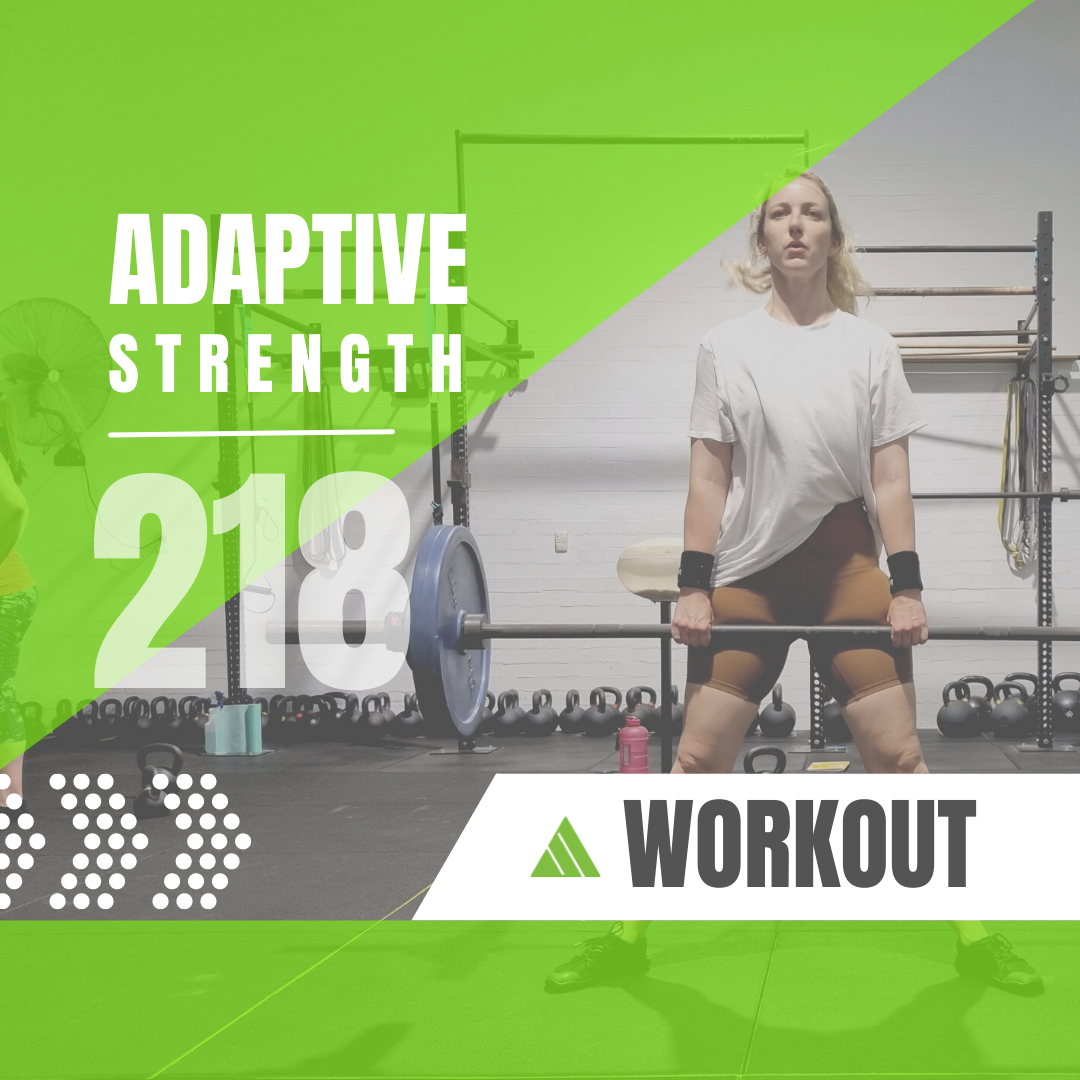
Workout 218 combines these qualities in a short, focused 15-minute session.
The exercises are:
- Single-arm kettlebell thrusters
- Slam balls
- Single-arm TRX rows
- Lateral box step-overs
Together, they create a workout involving whole-body strength, power, pulling control and lateral movement.
It is not sport-specific training. Performing lateral step-overs will not automatically improve your tennis footwork, and slam balls will not teach you how to throw.
However, the workout develops broad physical qualities that may support everyday movement, recreational activity and sport.
Workout 218 at a Glance
Set a timer for 15 minutes.
Complete as many quality rounds as possible of:
- Single-arm kettlebell thruster: 3 repetitions on each side
- Slam ball: 5 repetitions
- Single-arm TRX row: 5 repetitions on each side
- Lateral box step-over: 15 repetitions each side
Continue repeating the circuit until the timer finishes.
Rest whenever required.
The aim is not simply to record the highest possible round count. Your result should come from consistent, controlled exercise—not from rushing the repetitions or selecting easier movement standards halfway through.
What Makes This an Athletic-Style Workout?
The word athletic does not only apply to competitive athletes.
Athletic movement can include the ability to:
- Produce force
- Absorb and control force
- Move confidently in different directions
- Coordinate the upper and lower body
- Maintain balance
- React and reorganise your position
- Continue moving effectively while tired
Workout 218 includes several of these elements.
The kettlebell thruster asks the legs and upper body to work together.
The slam ball develops explosive whole-body effort.
The single-arm TRX row challenges pulling strength and trunk control one side at a time.
The lateral box step-over introduces sideways movement that is often missing from conventional gym workouts.
The exercises are still general strength and conditioning movements. They do not replace practising the skills required for a particular sport.
Their value comes from developing useful physical qualities that can support a broader training program.
Movement One: Connect the Legs and Upper Body
Single-Arm Kettlebell Thruster
Complete three repetitions on each side.
The kettlebell thruster combines a squat with an overhead press.
Begin with the kettlebell held in the rack position near one shoulder. Lower into a controlled squat, stand strongly and use the upward momentum from the legs to help press the kettlebell overhead.
The sequence should feel connected:
- Lower into the squat.
- Drive through the floor.
- Extend the hips and knees.
- Transfer that force into the press.
- Control the kettlebell back into the rack position.
The exercise can help develop:
- Leg strength
- Glute strength
- Shoulder and triceps strength
- Overhead control
- Whole-body coordination
- Core and trunk stability
- Strength under an uneven load
- Cardiovascular work capacity
Because the kettlebell is held on one side, your trunk must also resist excessive leaning or rotation.
Why Use a Single-Arm Thruster?
A two-arm thruster distributes the weight more evenly.
The single-arm version creates an uneven loading position and asks each side to work independently.
This may help develop:
- Control between the left and right sides
- Single-arm pressing strength
- Trunk stability
- Awareness of side-to-side differences
- Coordination under an offset load
Small differences between sides are normal. The aim is not to assume that every difference needs fixing.
The exercise gives you an opportunity to train each side with an appropriate load and monitor whether one side requires a different level of assistance or progression.
Practical Carryover
The thruster develops general qualities used when:
- Standing while holding an object
- Lifting something from chest height
- Placing an object onto a high shelf
- Moving equipment overhead
- Repeatedly lowering and standing
- Coordinating the legs and arms during physical work
It may also support sports involving running, throwing, reaching, jumping or overhead actions by developing general leg drive and whole-body coordination.
It does not teach the technical skill of those activities.
Thruster Coaching Notes
Focus on:
- Holding the kettlebell securely in the rack position
- Keeping your feet firmly planted
- Using a squat depth you can control
- Driving through the legs before pressing
- Keeping the kettlebell close during the transition
- Finishing in a stable overhead position
- Avoiding excessive leaning backwards
- Lowering the kettlebell smoothly
- Using a weight you can control on both sides
Three repetitions is a relatively low target, but the sets will accumulate across the 15 minutes.
Choose the weight based on what you can repeat—not only what feels manageable during the first round.
Thruster Alternatives
Possible alternatives include:
- Goblet squat to press
- Two-arm dumbbell thruster
- Single-arm push press
- Half-kneeling press
- Landmine press
- Goblet squat without the press
- Squat followed by a separate pressing exercise
Someone with limited overhead range or current shoulder discomfort may require a landmine press or another non-overhead option.
Movement Two: Produce Force With Intent
Slam Ball
Complete five repetitions.
The slam ball is an explosive exercise.
Raise the ball overhead and throw it forcefully towards the floor. Retrieve it with control and repeat.
The movement usually involves:
- Reaching overhead
- Producing force through the arms and trunk
- Using the hips and legs
- Moving quickly from tall to low
- Repeating a powerful whole-body effort
Slam balls can help develop:
- Whole-body power
- Upper-body force production
- Trunk involvement
- Coordination
- General conditioning
- Confidence moving quickly
- The ability to repeat explosive efforts
Five repetitions is enough to encourage forceful movement without turning the set into a long endurance effort.
Power Is Different From Simply Moving Fast
Power involves producing force quickly.
For the slam ball to remain a power exercise, each repetition should still be purposeful.
If the ball becomes very light and the movement turns into rapid arm flapping, the exercise may no longer provide the intended challenge.
At the same time, the ball should not be so heavy that you struggle to raise it overhead or cannot throw it with speed.
Choose a weight that allows you to:
- Lift the ball safely
- Reach overhead with control
- Slam it aggressively
- Retrieve it without losing balance
- Repeat all five efforts consistently
Everyday and Sporting Relevance
Explosive whole-body strength may support activities where you need to:
- Move an object quickly
- Produce force through the arms and trunk
- Change from a tall to low position
- Complete repeated physical tasks
- React with greater confidence
It may also support broad qualities involved in throwing, striking, sprinting and changing direction.
The slam ball does not teach those sporting skills. It provides a simple way to practise rapid whole-body force production.
Slam-Ball Coaching Notes
Focus on:
- Starting from a balanced position
- Holding the ball securely
- Reaching overhead without excessively arching your back
- Using the arms, trunk and hips together
- Slamming towards a clear area
- Following the ball down with control
- Using your hips and knees when retrieving it
- Resetting before the next repetition
Do not allow speed to turn the pickup into a rushed, poorly controlled lift from the floor.
Slam-Ball Alternatives
Possible options include:
- Using a lighter ball
- Reducing the overhead range
- Chest-pass variations
- Medicine-ball throws
- Kettlebell swings
- Fast cable pulls
- Controlled ball lifts without the slam
The alternative should match the person’s strength, coordination, environment and ability to move explosively.
Movement Three: Pull One Side at a Time
Single-Arm TRX Row
Complete five repetitions on each side.
The single-arm TRX row is a suspension-training exercise in which one arm pulls the body towards the handle.
Compared with a standard two-arm TRX row, the single-arm variation creates a larger rotational challenge.
The working arm produces the pull while your trunk and hips help prevent your body from turning uncontrollably towards the floor.
The movement can help develop:
- Upper-back strength
- Lat strength
- Biceps and arm strength
- Grip strength
- Shoulder-blade control
- Single-arm pulling strength
- Anti-rotation trunk control
- Whole-body coordination
Adjust the Difficulty With Your Feet
Your body angle determines much of the resistance.
Standing more upright reduces the amount of body weight you need to pull.
Moving your feet closer to the anchor point and leaning further back makes the exercise more challenging.
Small changes in foot position can make a considerable difference.
Choose an angle that allows you to:
- Maintain a stable grip
- Keep your feet planted
- Pull through a useful range
- Limit excessive trunk rotation
- Lower yourself under control
- Complete all five repetitions on each side
You may need to step back and reduce the difficulty during later rounds.
That is a sensible adjustment, not a failed workout.
Why Single-Arm Pulling Matters
Many daily activities involve one arm working more than the other.
Examples include:
- Pulling open a heavy door
- Moving an object towards you
- Starting gardening or work equipment
- Handling luggage
- Pulling something from a shelf
- Stabilising yourself with one arm
- Controlling an uneven object
Single-arm pulling strength may also support swimming, paddling, climbing, throwing and racquet sports.
The TRX row develops general strength and trunk control rather than reproducing these activities exactly.
Single-Arm TRX Row Coaching Notes
Focus on:
- Establishing a secure grip
- Keeping tension in the strap
- Maintaining a stable foot position
- Pulling your chest towards the handle
- Keeping your shoulder controlled
- Allowing the shoulder blade to move naturally
- Resisting excessive rotation
- Lowering your body slowly
- Using a similar range on each side
Some controlled trunk movement may occur. The aim is not to make the torso unnaturally rigid.
The goal is to prevent the exercise from becoming a large twisting movement driven by momentum.
Row Alternatives
Possible alternatives include:
- Two-arm TRX rows
- Staggered-stance TRX rows
- Cable rows
- Single-arm cable rows
- Resistance-band rows
- Bench-supported dumbbell rows
- Chest-supported rows
Movement Four: Step Sideways With Control
Lateral Box Step-Over
Complete the prescribed repetitions on each side or in each direction.
A lateral box step-over involves standing beside a low box or step, stepping onto it from the side, moving across the top and stepping down on the opposite side.
You then travel back in the other direction.
The movement differs from a standard forward step-up because the body approaches and crosses the box laterally.
It can challenge:
- Quadriceps and glute strength
- Lateral hip strength
- Single-leg control
- Balance and coordination
- Foot and ankle control
- Side-to-side movement confidence
- Muscular endurance
- Cardiovascular fitness
The high repetition target means this station may occupy a significant portion of each round.
Why Include Lateral Movement?
Many traditional strength exercises take place in the sagittal plane—primarily forwards, backwards, up and down.
Everyday movement and sport also require us to:
- Step sideways
- Move around objects
- Recover balance laterally
- Change direction
- Control the body on one leg
- Shift weight from side to side
Lateral step-overs provide a simple way to train sideways movement within a controlled gym setting.
They may support general qualities used in:
- Tennis
- Squash
- Basketball
- Netball
- Field sports
- Hiking
- Moving through crowded spaces
- Stepping around household or workplace obstacles
They do not replace sport-specific footwork drills.
Choose the Box Height Carefully
A lower step can still create a meaningful challenge, particularly when completing a large number of repetitions.
The box should allow you to:
- Place your foot securely
- Control the working knee
- Maintain balance
- Step across without jumping unnecessarily
- Lower yourself smoothly
- Keep a consistent rhythm
- Continue moving in both directions
A higher box is not automatically more athletic.
If the height causes you to stumble, rotate excessively or repeatedly push off the lower foot, reduce it.
Lateral Step-Over Coaching Notes
Focus on:
- Approaching the box from the side
- Placing your whole foot securely
- Driving through the leg on the box
- Keeping your knee aligned with your foot
- Standing with control as you cross
- Watching where you place your feet
- Lowering smoothly
- Maintaining a repeatable rhythm
- Giving both directions appropriate attention
Do not move so quickly that you begin clipping the edge of the box or losing awareness of your foot placement.
Step-Over Alternatives
Possible options include:
- A lower step
- Supported lateral step-ups
- Lateral toe taps
- Sideways marching over a low obstacle
- Standard forward step-ups
- Lateral lunges
- Side steps with a resistance band
- Reduced repetitions
How to Pace the 15-Minute AMRAP
A 15-minute AMRAP is long enough for poor pacing to catch up with you.
The first round should feel controlled.
Use it to assess:
- Whether the thruster weight is repeatable
- Whether you can keep producing powerful slams
- Whether your TRX angle is appropriate
- Whether the step-over count is manageable
- How much recovery you need
- Which exercise is likely to limit later rounds
Do not expect every station to take the same amount of time.
The thrusters and slam balls may be relatively quick.
The single-arm rows require changing sides and maintaining control.
The lateral step-overs may take the longest, particularly if 15 repetitions are completed in each direction.
Avoid the Fast-Start Trap
A common AMRAP mistake is to complete the first few minutes at a pace that cannot be sustained.
A better approach is:
Minutes 0–5
Move smoothly and establish your rhythm.
Minutes 5–10
Maintain your exercise standards and take brief rests when needed.
Minutes 10–15
Increase the pace only if your movement remains organised.
You should expect fatigue, but the workout should still resemble the same workout during the final minutes.
The thruster should not become a leaning press. The slam should not become a light drop. The row should not become a twist, and the step-over should not become an uncontrolled scramble.
Three Ways to Approach Workout 218
Rebuilding General Strength
Complete 10–12 minutes using:
- Goblet squat to press or light single-arm thruster: 3 each side
- Light slam ball: 5
- Two-arm or supported TRX row: 5–8
- Low lateral step-over: 6–10 each direction
Rest freely.
The goal is to learn the movements and maintain confidence throughout the circuit.
General Strength and Fitness
Complete the full 15 minutes using:
- Single-arm thrusters: 3 each side
- Slam balls: 5
- Single-arm TRX rows: 5 each side
- Lateral step-overs: 10–15 each direction
Choose exercise levels you can repeat consistently.
Greater Athletic Challenge
Complete the original 15-minute AMRAP.
Increase the challenge through:
- A suitable kettlebell weight
- More explosive slam-ball repetitions
- A lower TRX body angle
- A carefully selected box height
- More consistent pacing
- Improved lateral control
Do not simultaneously increase the weights, box height, repetitions and speed.
Coach’s Notes
Let the Legs Start the Thruster
The press should flow from the squat and leg drive.
Avoid turning every repetition into a slow shoulder press performed after the legs have stopped contributing.
Make Every Slam Powerful
There are only five slam-ball repetitions per round.
Treat them as five strong efforts rather than rushing through them.
Adjust the TRX Before the Row Breaks Down
Take a small step to reduce the difficulty when needed.
Do not wait until you are twisting and shortening the movement.
Respect the Step-Over Volume
If 15/15 means 30 total repetitions per round, this is a substantial lateral-conditioning station.
Use a lower box or reduce the repetitions when movement quality begins to change.
Transitions Count
Changing arms and moving between pieces of equipment can consume a large part of a short workout.
Set up your area so you can transition safely without rushing or crossing into another person’s space.
What Does a Good Result Look Like?
A good result is not only the number of completed rounds.
Look for:
- Consistent thruster technique
- Powerful slam-ball efforts
- Controlled single-arm rows
- Confident movement in both lateral directions
- Sensible pacing
- Efficient but safe transitions
- Similar movement standards in the final minutes
- A finish that feels demanding without becoming chaotic
Record your completed rounds and any additional repetitions.
For example:
Four rounds plus three thrusters on each side and five slam balls.
When you repeat the workout, improvement may mean:
- Completing more work
- Using a slightly heavier kettlebell
- Using a more challenging TRX angle
- Moving more confidently over the box
- Maintaining better technique
- Needing less rest
- Showing a smaller drop in pace
More rounds are only one form of progress.
Where This Workout Fits
Workout 218 includes:
- Squatting
- Overhead pressing
- Explosive whole-body effort
- Upper-body pulling
- Anti-rotation trunk control
- Single-leg movement
- Lateral movement
- Conditioning
That makes it a broad full-body session.
However, it is still one workout rather than a complete training program.
It does not contain a substantial:
- Heavy hip hinge
- Horizontal press
- Loaded carry
- Longer aerobic effort
- Maximal-strength exercise
Those qualities may be addressed during other sessions.
The appropriate version would also depend on:
- Your goals
- Your training experience
- Your shoulder and overhead capacity
- Your balance
- Your current fitness
- What you trained earlier in the week
- Your sport and recreational activities
- Your ability to recover
A workout provides a challenge for one day.
A program determines whether it is the right challenge, how it fits with your other sessions and how it should change over time.
Individualised Strength Training in Booragoon
Finding another challenging workout online is easy.
The harder part is knowing:
- Which exercises suit you
- How heavy the kettlebell should be
- Whether overhead pressing is appropriate
- Which TRX angle you should use
- How high the box should be
- How many rounds you can currently manage
- What you should train during your next session
- When and how the workout should progress
At Adaptive Strength in Booragoon, each member follows an individualised strength-training program within a supervised small-group environment.
You are not expected to complete the same workout, use the same weights or progress at the same rate as everyone else.
Your program is built around your:
- Goals
- Current strength and fitness
- Training experience
- Injury and medical history
- Movement ability
- Weekly schedule
- Sporting and recreational activities
One member may use a light goblet squat to press, two-arm TRX rows and a low step.
Another may perform heavier single-arm thrusters, challenging single-arm rows and faster lateral step-overs.
Both can train in the same supportive environment while following programs designed for their individual needs.
Our strength coaches, physiotherapists and Exercise Physiologist supervise your training, help select appropriate exercises and progress your program over time.
The value is not simply being given a list of exercises.
It is having a program designed for you, coached properly and progressed over time.
The first step is an initial consultation and movement assessment.
Book a quick chat with Adaptive Strength to find out whether our approach is right for you.