Grip Under Fatigue: A Carry, Crawl and Conditioning Workout
Grip strength rarely works alone.
When you carry shopping bags, move equipment, hold onto a support or handle an awkward object, your hands are working alongside your shoulders, upper back, trunk, hips and legs.
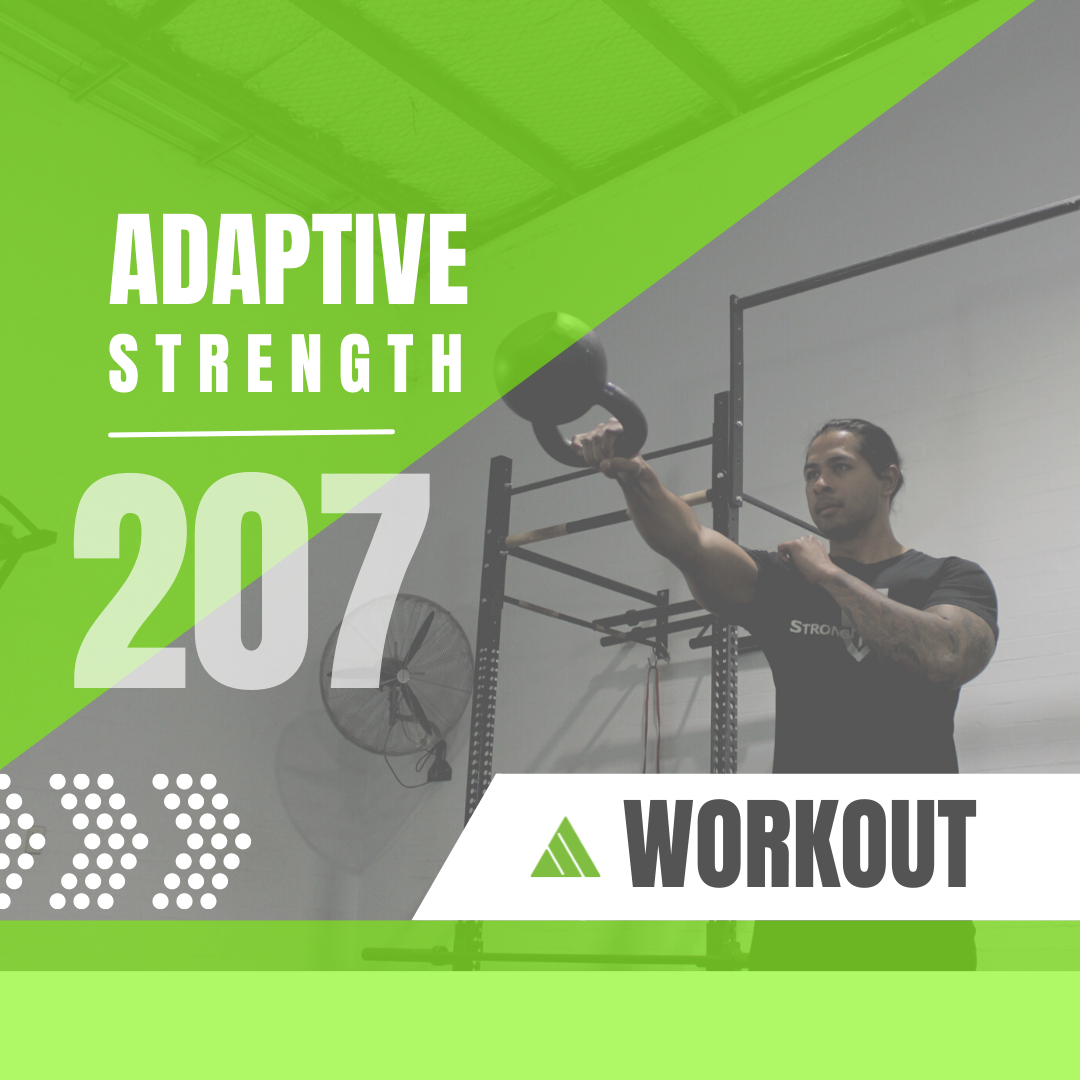
Workout 207 challenges that connection.
The session combines:
- AirBike conditioning
- Farmer’s carries
- Heavy slam-ball crawls
- Maximum dead hangs
At first glance, the exercises may appear unrelated.
The AirBike raises your breathing rate. The farmer’s carry asks you to walk under load. The ball crawl requires you to push a heavy object while moving close to the floor. The dead hang then asks you to support your body through your hands and shoulders for as long as possible.
There is a clear thread running through the entire workout:
Can you maintain your grip, posture and movement control as fatigue builds?
This makes Workout 207 more than a cardio circuit or a forearm workout. It is a whole-body work-capacity challenge in which grip is one of the main limiting factors.
Workout 207 at a Glance
Complete three to five rounds:
- AirBike: 500 metres
- Farmer’s carry: one lap up and back
- Heavy slam-ball crawl: 10 metres
- Dead hang: maximum hold
Complete the workout in 30 minutes or less.
Rest when required.
Depending on the person, the ball crawl may use a slam ball weighing approximately 25–40 kilograms.
The most appropriate weight depends on the person’s:
- Strength
- Body size
- Crawling ability
- Shoulder capacity
- Training experience
- Ability to keep the ball moving without losing control
One farmer’s-carry lap should use the established route within your training environment.
Why the Exercise Order Matters
The dead hang is not performed while you are fresh.
Before reaching the bar, you have already completed:
- A whole-body AirBike effort
- A loaded carry
- A heavy resisted crawl
Your forearms, hands, shoulders and upper back have already contributed to every station.
The maximum dead hang therefore measures more than your isolated hanging ability. It tests how long you can maintain your grip and shoulder position after accumulating fatigue.
The order also creates a useful contrast between movements:
- The AirBike is fast and rhythmic.
- The farmer’s carry is upright and heavily loaded.
- The ball crawl is slow, resisted and close to the floor.
- The dead hang is stationary but increasingly difficult.
Each exercise asks your body to solve a different problem.
Station One: AirBike — Create Fatigue Without Emptying the Tank
Complete 500 metres.
The AirBike uses both the upper and lower body. Your legs pedal while your arms push and pull the moving handles.
This can develop:
- Cardiovascular fitness
- Leg endurance
- Upper-body pushing and pulling endurance
- Coordination between the arms and legs
- Repeated-effort capacity
- General conditioning
However, the AirBike is only the beginning of the round.
You still need your hands, shoulders and upper body for the carries, crawls and dead hang.
Do Not Treat Every 500 Metres as a Sprint
Across the workout, you will complete:
- Three rounds: 1.5 kilometres
- Four rounds: 2 kilometres
- Five rounds: 2.5 kilometres
Starting every interval with an all-out effort may leave you unable to control the exercises that follow.
Use a pace that feels challenging but repeatable.
A useful goal is to keep your 500-metre times reasonably consistent rather than producing one very fast opening effort followed by a large drop in pace.
Focus on:
- Using both your arms and legs
- Maintaining a smooth rhythm
- Keeping your trunk controlled
- Breathing throughout the interval
- Avoiding an unnecessarily aggressive start
- Finishing ready to move into the carry
The AirBike should make the rest of the round more challenging, but it should not make it impossible to move safely.
Station Two: Farmer’s Carry — Practical Strength on the Move
Complete one lap up and back.
The farmer’s carry involves walking while holding a heavy weight in each hand.
Although the movement looks straightforward, walking under load requires several areas of the body to work together.
It can challenge:
- Grip and forearm strength
- Shoulder and upper-back stability
- Core and trunk control
- Hip and leg strength
- Walking posture
- General work capacity
- Confidence carrying heavier objects
Your hands must maintain their grip while your shoulders and upper back support the weights.
Your trunk must remain organised while your legs continue producing controlled steps.
Why Carries Matter Outside the Gym
Carrying is one of the most practical expressions of strength.
Similar physical qualities are used when:
- Carrying shopping bags
- Moving luggage
- Transporting tools
- Carrying buckets or containers
- Moving work equipment
- Carrying objects from a vehicle
- Completing gardening or household tasks
You may be strong enough to lift an object from the ground but still struggle to move it any distance because your grip or posture gives way.
The farmer’s carry trains your ability to hold and transport a load rather than simply lifting it once.
Carry the Weight—Do Not Let It Carry You
A heavier farmer’s carry is not automatically a better farmer’s carry.
The load should be challenging, but you should still be able to:
- Stand tall
- Keep the weights reasonably still
- Walk with natural steps
- Look ahead
- Turn safely
- Maintain your grip
- Lower the weights under control
Reduce the load if you begin:
- Leaning backwards
- Shrugging excessively
- Taking very short or hurried steps
- Allowing the weights to swing
- Losing control during the turn
- Repeatedly dropping the weights before completing the lap
A controlled carry that challenges your grip is more valuable than a heavier carry that significantly changes the way you move.
Station Three: Heavy Slam-Ball Crawl
Complete 10 metres.
For the ball crawl, begin in a crawling position and push a heavy slam ball along the floor as you travel forwards.
Depending on the person, the slam ball may weigh between approximately 25 and 40 kilograms.
This is not simply a normal bear crawl with a light object added.
The heavy ball creates considerable resistance. You must repeatedly push it forwards, move your body towards it and re-establish your position before pushing again.
The exercise combines:
- Upper-body pushing strength
- Shoulder stability
- Triceps strength
- Core and trunk control
- Hip and leg coordination
- Ground-based movement
- Whole-body strength endurance
- Cardiovascular effort
Why the Ball Crawl Is So Demanding
During a normal crawl, your arms and legs move your body across the floor.
During the heavy ball crawl, you must also overcome the resistance of the slam ball.
A typical sequence may look like this:
- Establish a strong crawling position.
- Push the ball forwards.
- Move your hands and feet towards the ball.
- Reorganise your body position.
- Push the ball again.
- Continue until you complete 10 metres.
Each push requires force through the arms and shoulders.
Each crawling step asks your trunk to remain controlled as opposite limbs move.
Your hips and legs must continue advancing your body while your breathing rate is already elevated from the AirBike and farmer’s carry.
Practical Carryover
The ball crawl develops general physical qualities that may help with tasks involving:
- Pushing a heavy object
- Moving equipment along the ground
- Working in a low position
- Supporting your body through your arms
- Coordinating the upper and lower body
- Continuing to produce force while fatigued
The gym exercise does not replicate every real-world pushing task. It provides a controlled way to develop the whole-body strength and work capacity that those tasks can require.
It may also support physical qualities used in sports involving:
- Contact
- Scrummaging or bracing
- Grappling
- Ground-based movement
- Pushing against resistance
- Repeated whole-body efforts
Sporting skill still needs to be developed through practising the sport itself.
Heavy Ball-Crawl Coaching Notes
Focus on:
- Beginning with stable hand placement
- Keeping your shoulders controlled
- Using a ball you can move without excessive twisting
- Producing a deliberate push
- Taking small, organised crawling steps
- Keeping your hips reasonably controlled
- Avoiding excessive side-to-side rotation
- Continuing to breathe
- Maintaining control as fatigue increases
Do not choose the heaviest ball simply because it is available.
The correct weight allows you to keep the ball moving while maintaining a recognisable and controlled crawl.
If the ball barely moves, your hips repeatedly twist or you need to stand between pushes, the load may be too heavy for the intended exercise.
Ball-Crawl Modifications
Possible adjustments include:
- Using a lighter slam ball
- Reducing the distance
- Completing five metres instead of ten
- Taking short breaks during the distance
- Performing a standard bear crawl without the ball
- Pushing the ball from a higher position
- Performing a heavy sled push
- Using a quadruped crawl with the knees closer to the floor
The alternative should preserve the broad purpose of resisted pushing, crawling or whole-body coordination while matching the person’s current ability.
Station Four: Maximum Dead Hang
Finish each round with a maximum dead hang.
Grip the overhead bar and hold your body underneath it for as long as you can maintain the required position.
The dead hang challenges:
- Grip endurance
- Forearm strength
- Shoulder tolerance
- Upper-back engagement
- Confidence supporting body weight
- Trunk control
- Mental tolerance to increasing muscular fatigue
The word maximum is important.
This is not a prescribed 20- or 30-second hold. Continue until you can no longer maintain your grip or the intended hanging position.
However, maximum should still mean maximum quality hold.
The set ends when:
- Your hands begin to open
- You can no longer maintain a secure grip
- Your shoulder position becomes uncomfortable
- You can no longer support yourself safely
- You need to use excessive swinging or movement
- You decide you cannot continue safely
You do not need to fall unexpectedly from the bar for the hold to count as maximal.
Why Put the Maximum Hang Last?
By the time you reach the bar, your grip has already worked during:
- The AirBike handles
- The farmer’s carry
- The heavy slam-ball crawl
Your shoulders and upper back have also accumulated fatigue.
The dead hang therefore becomes a direct test of grip endurance under fatigue.
It also changes how you approach the earlier stations.
If you choose farmer’s-carry weights that completely exhaust your hands, your dead-hang time may be very short.
If you sprint the AirBike and rush the crawl, your breathing and shoulder control may make the hang more difficult.
The workout rewards intelligent pacing rather than maximal effort at every possible moment.
Dead-Hang Position
Depending on the purpose and the person, the hang may be:
- A relaxed passive hang
- A more active hang with the shoulder blades gently engaged
- An assisted hang with some weight supported through the feet
- A hang using a neutral-grip handle
Follow the variation prescribed by your coach.
General priorities include:
- Establishing a secure grip
- Beginning from a stable position
- Avoiding unnecessary swinging
- Keeping the body reasonably controlled
- Breathing during the hold
- Dismounting safely
- Using a step or box rather than jumping unnecessarily to the bar
Dead-Hang Modifications
Someone who cannot yet support their full body weight may use:
- A foot-supported hang
- A lower bar with partial bodyweight support
- A resistance band for assistance
- A shorter submaximal hold
- A heavy farmer’s hold
- A cable or machine-based grip exercise
A maximum hang is not appropriate for every person on every day.
Someone managing a current hand, wrist, elbow or shoulder issue may require a different option.
How Grip Fatigue Accumulates Across the Round
Workout 207 does not contain a traditional set of wrist curls or isolated forearm exercises.
Instead, grip is challenged repeatedly through different tasks.
AirBike
Your hands hold the moving handles while the arms repeatedly push and pull.
The grip demand is moderate, but it begins accumulating from the first station.
Farmer’s Carry
The hands must hold two heavy weights continuously while you walk.
This is likely to create the greatest direct loaded-grip demand.
Heavy Ball Crawl
The hands repeatedly contact the ground and push into the slam ball.
This changes the position of the wrists and shoulders while continuing to challenge the upper body.
Maximum Dead Hang
The hands must support your body weight for as long as possible.
This exposes how much grip capacity remains at the end of the round.
The workout therefore trains more than one type of grip demand:
- Holding moving handles
- Carrying external loads
- Pushing into the floor and ball
- Supporting body weight
How to Pace the Workout
The original prescription is three to five rounds within 30 minutes.
That gives you an average of:
- Three rounds: up to 10 minutes per round
- Four rounds: approximately 7½ minutes per round
- Five rounds: approximately 6 minutes per round
You do not need to use every available minute, but the time limit helps prevent the workout from becoming excessively long.
Round One Should Establish Your Pace
Do not treat the opening round as a race.
Use it to assess:
- Whether the AirBike pace is repeatable
- Whether the farmer’s-carry weights are appropriate
- Whether the slam ball moves smoothly
- Whether you can maintain your crawling position
- How much grip remains for the dead hang
- How much recovery you need before beginning again
Your maximum hang in the first round may be your longest because you are freshest.
That is normal.
The aim is not necessarily to match the same hang time every round. The declining times can show how grip fatigue is accumulating.
Record the Hang Times
You may record your maximum hold after each round.
For example:
- Round one: 42 seconds
- Round two: 34 seconds
- Round three: 27 seconds
This provides more useful information than simply recording whether you completed the workout.
When repeating the session later, progress might mean:
- A longer first hang
- A smaller drop between rounds
- Using heavier carry weights
- Using a heavier slam ball
- Completing another round
- Maintaining better control
- Completing the same work in less time
Do not try to progress all these variables at once.
Three Ways to Approach Workout 207
Building Foundational Strength
Complete three rounds:
- AirBike: 250–400 metres
- Farmer’s carry: shorter lap with manageable weights
- Ball crawl: five metres with a lighter slam ball
- Dead hang: assisted or controlled submaximal hold
Take deliberate rest between stations.
The goal is to become familiar with the demands of each exercise without allowing grip fatigue to overwhelm your movement quality.
General Strength and Conditioning
Complete three to four rounds:
- AirBike: 500 metres
- Farmer’s carry: one lap up and back
- Ball crawl: 10 metres using an appropriate ball
- Dead hang: maximum quality hold
Use a steady pace and record your hang time after each round.
Full Grip-Endurance Challenge
Complete up to five rounds within 30 minutes:
- AirBike: 500 metres
- Heavy farmer’s carry: one lap up and back
- Heavy slam-ball crawl: 10 metres
- Dead hang: maximum hold
This version is best suited to someone who:
- Has experience with loaded carries
- Can crawl comfortably
- Can push the selected slam ball with control
- Can safely support their body from a bar
- Understands how to pace repeated conditioning work
- Can maintain technique under fatigue
Coach’s Notes
Save Your Grip on the AirBike
Hold the handles securely, but avoid squeezing them harder than necessary.
Excessive tension early in the round can accelerate forearm fatigue.
Choose Carry Weights You Can Control
The carry should challenge your hands, posture and walking strength.
It should not force you to shuffle, lean or repeatedly drop the weights.
The Ball Must Be Heavy but Movable
A 40-kilogram slam ball may suit one person, while 25 kilograms may be a substantial challenge for another.
Choose the ball based on movement quality rather than ego.
Push, Then Reorganise
After each push of the ball, establish your crawling position before pushing again.
Do not allow the exercise to become a series of uncontrolled lunges towards the ball.
Make the Dead Hang Truly Maximal—but Safe
Continue until your grip or position reaches its limit.
Use a controlled dismount rather than waiting to fall from the bar.
Expect the Hang Time to Decline
The workout is deliberately creating grip fatigue.
A shorter hold in later rounds does not automatically mean you have performed poorly.
What Does a Good Result Look Like?
A good result is not only completing five rounds.
Look for:
- Consistent AirBike pacing
- Controlled farmer’s carries
- A stable walking position
- Strong, deliberate ball pushes
- Organised crawling between pushes
- Honest maximum dead hangs
- Safe transitions
- Sensible rest
- No major technical collapse in the final round
A three-round workout completed with excellent movement may provide a better training effect than five rushed rounds.
Progress can also be measured through:
- Heavier carry weights
- A heavier slam ball
- Longer dead hangs
- Less decline between hang times
- More consistent AirBike splits
- Better control
- Reduced rest
- An additional round
Where This Workout Fits
Workout 207 develops:
- Grip endurance
- Loaded carrying strength
- Upper-body support and pushing strength
- Ground-based coordination
- Cardiovascular conditioning
- Whole-body work capacity
It is particularly strong as a grip-and-conditioning session.
However, it does not provide a complete strength program.
There is no significant:
- Squat through a full range
- Heavy hip hinge
- Upper-body press through a large range
- Upper-body row
- Single-leg strength exercise
- Rotational-strength exercise
Those movement patterns may be trained during other sessions in the week.
The suitability of this workout would also depend on:
- Your goals
- Your training experience
- Your hand and shoulder capacity
- Your current conditioning
- What you trained earlier in the week
- How well you recover
- Your work, sport and other physical activities
The workout provides a challenging session.
A program determines whether this is the challenge you need and how it should progress over time.
Individualised Strength Training in Booragoon
Finding a hard workout online is easy.
The more important questions are:
- Are the exercises suitable for you?
- How heavy should your farmer’s carries be?
- Should you use a 25-, 30- or 40-kilogram slam ball?
- Is a maximum dead hang appropriate for your shoulders?
- Should you complete three rounds or five?
- What should you train during your next session?
- How should the workout change as you become stronger?
At Adaptive Strength in Booragoon, each member follows an individualised strength-training program within a supervised small-group environment.
You are not expected to complete the same workout or use the same weights as everyone else.
Your program is based on your:
- Goals
- Current strength and fitness
- Training experience
- Injury and medical history
- Movement ability
- Weekly schedule
- Sporting and recreational activities
One member may use lighter carries, a 25-kilogram slam ball and a foot-supported hang.
Another may carry substantially heavier weights, push a 40-kilogram ball and complete a full maximum dead hang.
Both can train in the same supportive environment while following programs appropriate for their individual needs.
Our strength coaches, physiotherapists and Exercise Physiologist supervise your training, help select the right exercises and progress your program over time.
The value is not simply being given a list of exercises.
It is having a program designed for you, coached properly and progressed over time.
The first step is an initial consultation and movement assessment.
Book a quick chat with Adaptive Strength to find out whether our approach is right for you.