Balanced Push, Pull and Lunge Strength Workout
A balanced strength workout does not need a long list of exercises.
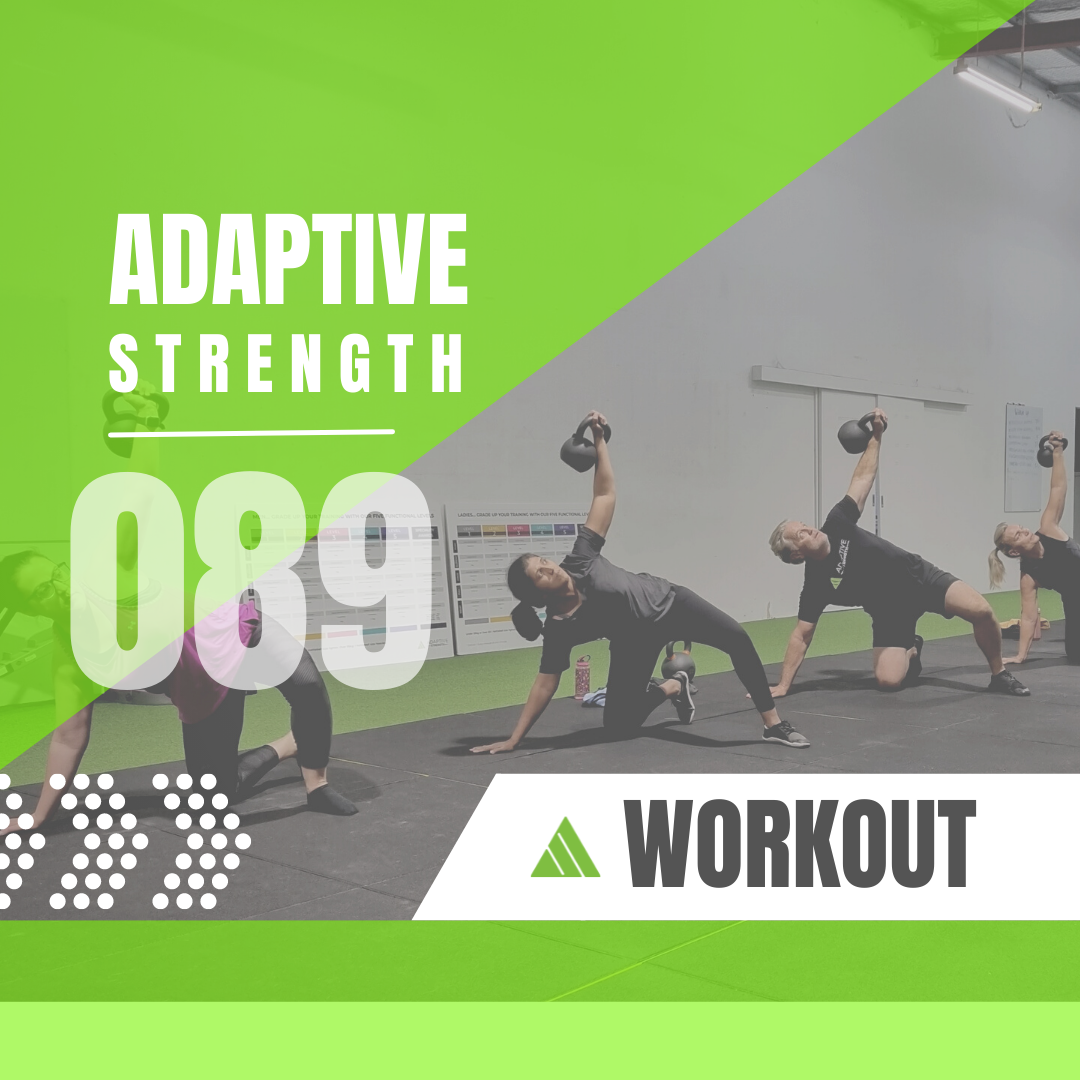
This session uses three movements:
- Three-point rows
- Single-arm kettlebell floor presses
- Dead-ball lunges
Together, they challenge:
- Upper-body pulling strength
- Upper-body pushing strength
- Single-leg strength
- Hip and knee control
- Core and trunk stability
- Grip strength
- Balance and coordination
- Control under uneven loads
The three-point row develops the muscles of the upper back and arms while requiring the trunk to remain controlled.
The single-arm floor press develops chest, shoulder and triceps strength while the body resists rotation from an uneven load.
The dead-ball lunge adds lower-body strength, balance and the ability to step and control your body while carrying resistance.
This creates a simple full-body strength workout with a clear balance between pushing, pulling and lower-body training.
Workout Overview
Complete five rounds:
A1. Three-Point Row
Complete:
- 5 repetitions on the left side
- 5 repetitions on the right side
A2. Single-Arm Kettlebell Floor Press
Complete:
- 8 repetitions on the left side
- 8 repetitions on the right side
A3. Dead-Ball Lunge
Complete:
- 5 repetitions on each leg
Rest as needed between exercises and rounds.
The original workout was designed to be completed in 30 minutes or less.
However, the 30-minute target should not cause you to rush the exercises or select weights you cannot control.
The purpose is to complete five good-quality rounds—not simply to finish as quickly as possible.
Choose Your Starting Level
You do not need to begin with all five rounds.
Beginner or Returning to Training
Complete:
- 2–3 rounds
- A supported row with a manageable weight
- A light two-arm or single-arm floor press
- Bodyweight or lightly loaded lunges
Rest for approximately 60–90 seconds between rounds when needed.
Someone who is not yet comfortable lunging may use a split squat, supported lunge or sit-to-stand variation.
Intermediate
Complete:
- 3–4 rounds
- Five controlled rows on each side
- Eight floor presses on each side
- Five loaded lunges on each leg
Choose weights that become challenging without causing significant changes in technique.
Experienced
Complete the original five-round workout.
Increase the challenge through appropriate load and movement quality rather than simply reducing the time taken to complete the workout.
This Is One Workout, Not a Complete Training Program
This article provides one workout. It is not a complete training program.
A workout tells you which exercises to perform during one training session.
A training program looks at the bigger picture. It determines:
- Which exercises are appropriate for you
- Which physical qualities need the greatest attention
- How frequently you should train
- How your sessions fit together across the week
- How much weight and training volume you should begin with
- How training fits around injuries, sport, work and other activities
- How much recovery you need
- When an exercise should be progressed
- When your program needs to be modified
- Whether your training is moving you towards your goals
This workout includes:
- An upper-body pull
- An upper-body push
- A single-leg lower-body exercise
- Grip and trunk-stability work
A complete program would also consider whether you need:
- Bilateral squat strength
- Hip-hinge strength
- Overhead strength
- Loaded carrying
- Rotational strength
- Power
- Balance
- Cardiovascular conditioning
- Mobility and recovery work
It would also consider what you trained in your previous session, what you will train next and how your body is responding over time.
The workout provides today’s training.
Your program determines how today’s session contributes to your longer-term progress.
Who Is This Workout For?
This workout may suit someone who:
- Has some previous strength-training experience
- Wants to develop balanced upper-body strength
- Wants to improve single-leg strength and control
- Can perform an appropriate rowing variation
- Is comfortable completing floor-based exercises
- Can use a suitable lunge or split-stance exercise
- Wants a focused full-body workout
- Has approximately 25–30 minutes available
The broad structure can also be adjusted for someone returning to strength training.
The exercises are flexible enough to be made easier or more challenging by changing:
- The weight
- The exercise variation
- The range of movement
- The level of support
- The number of repetitions
- The number of rounds
Someone currently managing shoulder, wrist, back, hip or knee concerns may require a different starting point.
Equipment You Will Need
Depending on the variations used, you will need:
- One or two kettlebells or dumbbells
- A bench, box or stable support for the three-point row
- An exercise mat
- A dead ball or medicine ball
- Enough floor space to lunge safely
- A timer
You may need different weights for the row and floor press.
The dead ball used for the lunges should also be selected separately.
Trying to use one load for every exercise may make one movement too easy and another unnecessarily difficult.
Exercise 1: Three-Point Row
Complete five repetitions on each side.
A three-point row is a supported single-arm rowing exercise.
The name refers to maintaining three points of contact or support while one arm performs the row.
A common setup uses:
- Two feet on the floor
- One hand supported on a bench, box or stable surface
The free hand holds the kettlebell or dumbbell.
The support allows you to focus on upper-body pulling strength while maintaining a stable trunk position.
What Does the Three-Point Row Develop?
Three-point rows can help develop:
- Upper-back strength
- Lat strength
- Biceps and arm strength
- Grip strength
- Shoulder-blade control
- Shoulder stability
- Core and trunk control
- Strength differences between sides
The supported position reduces some of the balance demand compared with an unsupported bent-over row.
However, your trunk must still remain controlled as the weight moves in one hand.
Because each side works separately, the exercise also allows you to notice differences in strength, range or coordination between sides.
Daily-Life Carryover
Upper-body pulling strength is useful when:
- Opening a heavy door
- Pulling an object towards you
- Moving furniture or equipment
- Handling bags and luggage
- Starting some types of gardening equipment
- Pulling something from a shelf
- Holding onto a support
- Moving an object closer to your body
Upper-back and grip strength can also help when carrying or handling objects for longer periods.
The supported stance may reflect situations where one hand braces against a surface while the other hand lifts or moves something.
Sporting Carryover
Upper-body pulling and shoulder control may support activities involving:
- Swimming
- Rowing
- Paddling
- Climbing
- Racquet sports
- Grappling
- Contact sports
- Throwing
- Gymnastics
- Obstacle-course activities
The three-point row does not directly reproduce these sporting actions.
It develops general pulling strength and shoulder control that may contribute to them.
Three-Point Row Coaching Tips
Focus on:
- Placing your supporting hand securely
- Keeping both feet firmly planted
- Establishing a stable hip and trunk position
- Keeping the weight close to your body
- Pulling the weight towards your hip or lower ribs
- Allowing the shoulder blade to move naturally
- Avoiding excessive shrugging
- Limiting unnecessary trunk rotation
- Lowering the weight under control
- Completing a similar controlled range on both sides
Do not twist the whole body simply to move the kettlebell higher.
The goal is to use the upper back and arm while the trunk remains reasonably stable.
Three-Point Row Modifications
Possible alternatives include:
- Using a lighter weight
- Increasing the height of the support
- Reducing the range of movement
- Bench-supported dumbbell rows
- Chest-supported rows
- Cable rows
- Resistance-band rows
- TRX rows
- Seated rows
A chest-supported or seated row may be useful for someone who finds the bent-over position difficult to maintain.
Exercise 2: Single-Arm Kettlebell Floor Press
Complete eight repetitions on each side.
The single-arm floor press is performed while lying on the floor and pressing a kettlebell above the chest.
One arm works at a time while the trunk helps prevent the uneven load from rotating your body.
The floor limits how far the upper arm can travel behind the body.
This creates a different movement from a bench press and may make the exercise more manageable for some people.
What Does the Single-Arm Floor Press Develop?
Single-arm floor presses can help develop:
- Chest strength
- Triceps strength
- Shoulder strength
- Upper-body pressing strength
- Shoulder control
- Core and trunk stability
- Control under an uneven load
- Awareness of strength differences between sides
The kettlebell’s weight sits slightly differently from a dumbbell because the bell is positioned behind the handle.
This requires you to maintain control through the wrist, forearm and shoulder.
The single-arm setup also creates a rotational force through the trunk.
Your body must resist rolling towards the working side as you press.
Daily-Life Carryover
Upper-body pushing strength is useful when:
- Opening a heavy door
- Pushing a trolley
- Moving furniture
- Moving equipment
- Getting up from the floor
- Supporting yourself through your arms
- Pushing an object away
- Completing household or workplace tasks
The single-arm variation also develops control when one side is working harder than the other.
Many real-life tasks involve reaching or pushing with one arm rather than pressing evenly with both arms.
Sporting Carryover
Pressing strength and trunk control may support activities involving:
- Throwing
- Racquet sports
- Contact sports
- Bracing
- Pushing against another player
- Swimming
- Gymnastics
- Ground-based sporting positions
The floor press develops general pushing strength.
It does not replace sport-specific technique or practice.
Single-Arm Floor-Press Coaching Tips
Focus on:
- Positioning the kettlebell safely before lying down
- Keeping your feet and lower body stable
- Maintaining control through your ribs and pelvis
- Keeping your wrist relatively straight
- Keeping your forearm underneath the weight
- Lowering the kettlebell under control
- Allowing the upper arm to contact the floor gently
- Pressing to a stable finishing position
- Avoiding excessive trunk rotation
- Returning the kettlebell safely after the set
Do not allow the working elbow or kettlebell to drop quickly towards the floor.
The lowering phase is an important part of the exercise.
Floor-Press Modifications
Possible alternatives include:
- Using a lighter kettlebell
- Using a dumbbell
- Pressing with both arms
- Reducing the range of movement
- Incline push-ups
- Wall push-ups
- Cable chest presses
- Machine chest presses
Someone unfamiliar with kettlebells may find a dumbbell easier to control initially.
Exercise 3: Dead-Ball Lunge
Complete five repetitions on each leg.
The original workout lists dead-ball lunges but does not specify:
- Whether the lunge travels forwards, backwards or remains stationary
- Where the dead ball is held
- Whether the repetitions alternate
- Whether the ball is carried at the chest, shoulder or another position
Follow the version demonstrated by your coach.
A common option would be to hold the ball close to the chest while performing alternating reverse lunges or split squats.
The important feature is that the lunge remains controlled and the load does not pull you out of position.
What Do Loaded Lunges Develop?
Dead-ball lunges can help develop:
- Quadriceps strength
- Glute strength
- Single-leg strength
- Hip and knee control
- Balance and coordination
- Trunk stability
- Grip and upper-body support
- The ability to step and recover your position
- Control while carrying a load
Lunges differ from squats because the legs work from a split or stepping position.
One leg generally performs more of the work while the other helps provide support and balance.
Holding a dead ball adds resistance and requires the trunk and upper body to help control the load.
Daily-Life Carryover
Lunge strength and control may support everyday activities such as:
- Stepping forwards or backwards
- Lowering towards the floor
- Gardening
- Getting into a kneeling position
- Standing up from a low position
- Walking over uneven ground
- Carrying an object while stepping
- Regaining balance after an awkward step
- Moving through crowded or restricted spaces
The ability to step backwards with control may be particularly useful when moving around obstacles or recovering your position.
Holding a load while lunging also reflects the fact that daily movement often happens while carrying an object.
Sporting Carryover
Single-leg strength and control are important in many sporting movements, including:
- Running
- Accelerating
- Decelerating
- Jumping
- Landing
- Changing direction
- Tennis and other court sports
- Field sports
- Hiking
- Skiing
- Reaching into a low athletic position
The dead-ball lunge does not reproduce these sporting movements exactly.
It develops some of the leg strength, balance and trunk control that may support them.
Dead-Ball Lunge Coaching Tips
The exact technique will depend on the lunge variation used.
General priorities include:
- Holding the ball securely
- Beginning from a balanced standing position
- Taking a controlled step
- Keeping the front foot firmly planted
- Allowing the front knee to move in the same direction as the toes
- Lowering through a range you can control
- Keeping your trunk organised
- Driving through the working foot to return
- Avoiding excessive wobbling or twisting
- Completing a similar controlled range on each side
Do not make the step so long or short that you lose balance or cannot produce force comfortably.
The ball should add useful resistance rather than obscure your view or pull you out of position.
Dead-Ball Lunge Modifications
Possible alternatives include:
- Bodyweight reverse lunges
- Supported reverse lunges
- Split squats
- Supported split squats
- Sit-to-stands
- Squats to a box
- Holding a lighter ball
- Using a shallower range
- Performing step-ups
- Holding onto a stable support
A split squat removes the stepping component and may be easier for someone who needs more time to establish their balance.
Why Do These Exercises Work Well Together?
The workout combines three major movement categories.
Three-Point Row: Pull
The row develops upper-body pulling strength through the back, shoulders and arms.
Single-Arm Floor Press: Push
The floor press develops upper-body pushing strength through the chest, shoulders and triceps.
Dead-Ball Lunge: Lower Body
The lunge develops leg strength, balance and control from a split or stepping position.
Together, these movements create a clear push, pull and lower-body structure.
The row and floor press balance opposing upper-body actions.
The single-arm setup of both exercises also challenges the trunk to remain controlled under an uneven load.
The dead-ball lunge adds the lower body and requires you to maintain balance while moving through one leg at a time.
This creates a practical full-body strength session without requiring many exercises.
However, it is still only one workout.
The session does not contain a significant:
- Bilateral squat
- Heavy hip hinge
- Vertical pulling movement
- Overhead press
- Loaded carry
- Rotational exercise
- Power exercise
- Cardiovascular-conditioning section
Those physical qualities may be trained elsewhere within a complete program.
How Hard Should the Workout Feel?
The first one or two rounds should feel controlled.
The later rounds should become more challenging, but you should still be able to maintain the intended technique.
You may notice:
- Upper-back and grip fatigue during the rows
- Chest, shoulder and triceps fatigue during the presses
- Leg and balance fatigue during the lunges
- Greater trunk demand as the uneven loads accumulate
- A moderate increase in breathing rate
- A greater need to concentrate on each movement
Reduce the weight, repetitions or number of rounds if:
- You twist excessively during the row
- You cannot control the lowering phase
- Your shoulder position becomes uncomfortable
- Your trunk rolls significantly during the floor press
- Your wrist loses control of the kettlebell
- Your balance deteriorates during the lunges
- Your knee or foot position changes significantly
- You begin rushing the transitions
- You experience pain rather than normal muscular effort
Completing three controlled rounds is generally more useful than forcing yourself through five rounds with poor movement quality.
How Can You Progress the Workout?
Progress one variable at a time.
Possible progressions include:
- Increasing from two rounds to three
- Building from three rounds towards five
- Adding a small amount of weight to the row
- Improving trunk control during the row
- Increasing the floor-press weight
- Improving kettlebell control
- Increasing the dead-ball load
- Improving lunge depth or balance
- Progressing from a supported lunge to an unsupported version
- Adding one controlled repetition
- Reducing rest periods slightly
- Completing the same workout with more consistent technique
You do not need to progress every exercise during the same session.
Your row may improve more quickly than your floor press. Your leg strength may be sufficient to increase the dead-ball load while your balance still requires a supported lunge.
Progress should reflect the quality of your previous training rather than simply your ability to complete the workout.
How Adaptive Strength Builds an Individualised Training Program
At Adaptive Strength, we do not simply give every member the same workout of the day.
Each member follows an individualised strength-training program based on their:
- Goals
- Current strength and fitness
- Training experience
- Injury and medical history
- Movement ability
- Weekly availability
- Sporting and recreational activities
- Response to previous training
Your sessions form part of a planned program rather than a collection of unrelated workouts.
A complete program considers:
- Which exercises are most appropriate for you
- Which physical qualities need the greatest attention
- How your training sessions fit together across the week
- How much training you can currently tolerate and recover from
- How your strength work fits around sport, work and other activities
- When an exercise, weight or training volume should be progressed
- When your program needs to be modified
Two members may train beside each other while following completely different programs because they have different goals, starting points and training histories.
One member may use a light supported row, a two-arm floor press and bodyweight split squats.
Another may complete heavier kettlebell rows, single-arm presses and loaded reverse lunges.
Both can receive an appropriate strength challenge within the same supervised small-group environment.
Our coaches supervise each session, monitor how you are moving and make adjustments when required. Your program can then gradually progress as your strength, confidence and physical capacity improve.
The value is not simply being given a list of exercises.
It is having a program designed for you, coached properly and progressed over time.
Should You Try This Workout?
This workout may be useful if you can select an appropriate rowing exercise, floor press and loaded lunge variation.
However, one online workout cannot assess your technique, balance, injury history, current training capacity or how the session should fit into the rest of your week.
That is the difference between completing a workout and following an individualised training program.
Looking for a More Personalised Approach?
Adaptive Strength provides individualised strength programs within a supportive, supervised small-group training environment in Booragoon.
Your program is built around your:
- Current ability
- Training experience
- Goals
- Injury history
- Exercise preferences
- Weekly schedule
Our strength coaches, physiotherapists and Exercise Physiologist work together to help members progress from their current starting point towards greater strength, confidence and long-term physical capacity.
Whether you are returning after an injury, getting back into exercise or looking for a more structured approach to training, the first step is an initial consultation and movement assessment.
Book a quick chat with Adaptive Strength to find out whether our approach is right for you.