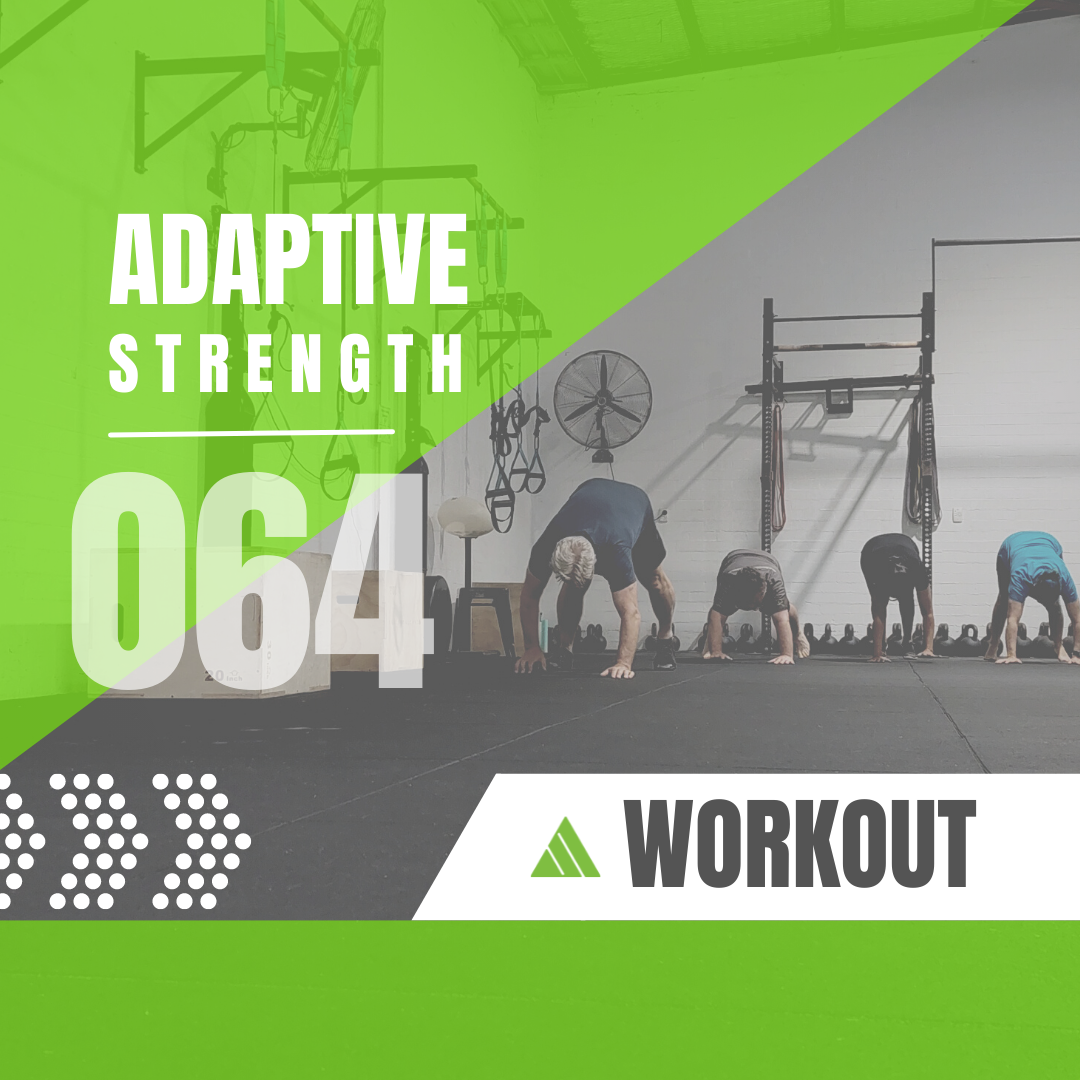
A good workout should do more than simply leave you tired.
It should challenge useful physical qualities, include exercises appropriate for your current ability and allow you to maintain good movement quality from beginning to end.
This full-body workout combines:
- Lower-body strength
- Single-leg control
- Upper-body pressing strength
- Core and trunk stability
- Coordination
- General conditioning
The session uses four exercises:
- Reverpees
- Step-ups
- Alternating suitcase deadlifts
- See-saw presses
Although the workout looks simple on paper, the right exercise variation, weight and total amount of work will be different for each person.
The goal is not to race through every repetition. Aim to move consistently, maintain good technique and choose a level that challenges you without causing your movement quality to deteriorate.
Workout Overview
This session has two parts.
Part A
Complete:
- 5 reverpees
- 5 step-ups on each leg
Repeat for up to 25 rounds.
Part B
Complete:
- 5 suitcase deadlifts on each side
- 5 see-saw presses on each side
Continue alternating between the two exercises for up to 30 minutes.
The original workout was designed to be completed in 60 minutes or less.
However, 25 rounds followed by 30 minutes of additional strength work is a substantial amount of training. You do not need to complete the full version to benefit from the session.
Choose the amount of work that is appropriate for your current strength, fitness and experience.
This Is a Workout, Not a Complete Training Program
This article gives you one workout. It is not a complete training program.
A workout is one training session. It tells you which exercises to perform on one particular day.
A training program looks at the bigger picture. It determines:
- Which exercises are appropriate for you
- How frequently you should train
- How your sessions fit together across the week
- How much weight and training volume you should begin with
- Which areas of your strength and fitness need greater attention
- When exercises should be progressed
- How much recovery you need
- How training should fit around injuries, sport, work and other activities
- Whether your training is moving you towards your goals
One workout can feel challenging and productive, but completing a collection of unrelated workouts does not necessarily produce consistent long-term progress.
For example, this session includes stepping, deadlifting and overhead pressing. A complete program would also consider whether you need additional pulling strength, horizontal pressing, balance, mobility, aerobic conditioning, power or recovery work during the rest of the week.
It would consider what you completed in your previous session, what you are doing next and how your body is responding over time.
The workout provides today’s training. The program determines how today’s training fits into the bigger picture.
Who Is This Workout For?
This workout may suit someone who:
- Has some previous strength-training experience
- Is comfortable performing step-ups, deadlifts and pressing exercises
- Wants to improve general strength and fitness
- Has access to kettlebells or dumbbells and a stable exercise step
- Can maintain good movement quality as fatigue builds
Someone who is new to strength training, returning after a long break or currently managing an injury should begin with a lower-volume version and suitable exercise modifications.
You should also be familiar with each exercise before attempting the full session.
Equipment You Will Need
You will need:
- A stable exercise step or box
- One or two kettlebells or dumbbells
- Enough clear floor space to move safely
- A timer
Choose weights that feel challenging but still allow you to remain balanced and controlled.
A heavier weight is not automatically better. The most useful weight is one you can manage with good technique for the intended number of repetitions.
Part A: Reverpees and Step-Ups
Complete the following two exercises as a circuit.
A1. Reverpees
Complete 5 repetitions.
A2. Step-Ups
Complete 5 repetitions on each leg.
Repeat for your selected number of rounds.
Choose Your Starting Level
Beginner or Returning to Training
Complete 5–8 rounds.
Rest for approximately 45–90 seconds between rounds as needed.
Intermediate
Complete 10–15 rounds.
Take short breaks as required while maintaining consistent technique.
Experienced
Complete up to 25 rounds.
The full 25-round version should only be attempted if you already have experience with both exercises and can maintain control as fatigue increases.
Movement quality should remain the priority throughout the workout.
What Do Reverpees Develop?
Reverpees challenge your ability to move between a low or floor-based position and standing while maintaining control.
The precise technique can vary, so follow the reverpee variation demonstrated by your coach or shown in the accompanying exercise video.
Reverpees can help develop:
- Whole-body coordination
- Hip and trunk control
- Lower-body strength
- General conditioning
- Confidence moving towards and away from the floor
- The ability to change body position while fatigued
These qualities can carry over into daily activities such as getting up after gardening, playing with children or grandchildren, completing tasks close to the floor and maintaining confidence with floor-based movement.
In sport, the ability to change levels, recover from the ground and coordinate the whole body while fatigued can also be useful.
Reverpees can elevate your heart rate quickly, which makes them an effective conditioning exercise. However, they may need to be changed for someone who has difficulty getting to the floor or is managing wrist, shoulder, back, knee or balance concerns.
Possible alternatives include:
- Sit-to-stands
- Squats to a box
- Supported floor transitions
- Reverse lunges
- Step-back burpees using an elevated surface
- Another low-impact conditioning exercise
The alternative should preserve the purpose of the movement while matching the individual’s current ability.
What Do Step-Ups Develop?
Step-ups primarily develop strength through the hips and legs while requiring you to balance and produce force through one side of the body.
They can help develop:
- Quadriceps and glute strength
- Single-leg control
- Balance and coordination
- Hip and knee stability
- The ability to produce force through one leg
Step-ups have a clear relationship to everyday activities such as:
- Climbing stairs
- Stepping onto a curb
- Walking uphill
- Hiking
- Carrying something upstairs
- Getting into a high vehicle
- Stepping onto an uneven surface
They may also help develop some of the underlying leg strength and single-leg control required for running, accelerating, jumping, landing and changing direction.
Step-ups are not a replacement for practising these sporting skills. Instead, they help build some of the physical qualities that support them.
Step-Up Coaching Tips
Choose a box height that allows you to step up without losing balance or relying excessively on the leg that remains on the floor.
As you perform the movement:
- Place your whole foot securely on the box
- Keep your knee tracking in the same direction as your toes
- Drive through the foot on the box
- Stand tall at the top
- Avoid pushing excessively from the lower leg
- Lower yourself under control
A lower box generally makes the exercise more manageable. A higher box or additional weight can make it more challenging.
Possible alternatives include:
- Lower step-ups
- Supported step-ups
- Sit-to-stands
- Split squats with support
- Reverse lunges
- Squats to a box
The best alternative depends on why the standard step-up is unsuitable.
Part B: Suitcase Deadlifts and See-Saw Presses
Set a timer and alternate between the following exercises.
B1. Alternating Suitcase Deadlift
Complete 5 repetitions on each side.
B2. See-Saw Press
Complete 5 repetitions on each side.
Continue for your selected training time.
Choose Your Starting Level
Beginner or Returning to Training
Complete 8–12 minutes.
Use a manageable weight and take breaks whenever required.
Intermediate
Complete 15–20 minutes.
Maintain a controlled pace rather than trying to complete as many rounds as possible.
Experienced
Complete up to 30 minutes.
Use the full duration only if you can maintain good deadlift and pressing technique throughout the session.
What Do Suitcase Deadlifts Develop?
The suitcase deadlift is an asymmetrically loaded exercise. This means the weight is positioned on one side of your body rather than being evenly distributed between both hands.
Your legs and hips create the movement while your trunk works to prevent the weight from pulling you sideways.
Suitcase deadlifts can help develop:
- Glute and hamstring strength
- General leg strength
- Hip-hinge technique
- Grip strength
- Core and trunk stability
- Control under an uneven load
- Anti-lateral flexion strength
Anti-lateral flexion refers to your ability to resist being pulled or bent sideways.
Because the load is positioned on one side, the exercise can also create a rotational challenge. Your trunk must work to keep your hips and shoulders controlled rather than allowing your body to twist towards the weight.
This can carry over into everyday activities that involve lifting or carrying uneven loads, such as:
- Picking up a shopping bag
- Lifting a suitcase from the ground
- Carrying something in one hand
- Moving equipment at work
- Carrying a child on one side
- Handling an awkward object
In sport, hip strength and trunk stability may help you remain controlled while running, changing direction, throwing, swinging a racquet or absorbing contact.
The suitcase deadlift does not reproduce those sporting actions exactly. It develops general physical qualities that may support them.
Suitcase Deadlift Coaching Tips
As you perform the movement:
- Keep both feet firmly planted
- Push your hips backwards
- Keep the weight close to your body
- Maintain a stable trunk position
- Keep your hips and shoulders facing forward
- Stand tall without leaning away from the weight
- Lower the weight under control
The exercise should feel like a leg and hip-strength movement with an additional trunk-stability challenge.
Avoid turning it into a sideways bend.
Possible alternatives include:
- Deadlifting from an elevated surface
- Using a lighter kettlebell or dumbbell
- Holding one weight in each hand
- Kettlebell deadlifts from between the feet
- Trap-bar deadlifts
- Practising the hip hinge without weight
Someone who is still learning the movement may begin with an evenly loaded deadlift before progressing to the suitcase variation.
What Do See-Saw Presses Develop?
The see-saw press involves alternating overhead presses. As one arm presses upwards, the other arm lowers or remains controlled.
This combines upper-body strength with trunk stability and coordination.
See-saw presses can help develop:
- Shoulder strength
- Triceps strength
- Overhead pressing strength
- Shoulder control
- Core and trunk stability
- Coordination between both arms
- The ability to resist excessive leaning or rotation
Overhead strength can be useful when placing objects onto a high shelf, handling equipment above shoulder height or completing household and workplace tasks overhead.
The general strength and stability developed through the exercise may also support activities involving throwing, serving, swimming, racquet sports or reaching overhead.
Sporting technique must still be developed through practice of the sport itself.
See-Saw Press Coaching Tips
As you perform the exercise:
- Begin with a stable stance
- Keep your ribs and trunk controlled
- Press without leaning backwards
- Avoid shifting excessively from side to side
- Lower each weight smoothly
- Maintain control of both weights
- Use a load you can manage equally on both sides
Do not force an overhead range that you cannot comfortably control.
Possible alternatives include:
- Single-arm overhead presses
- Half-kneeling presses
- Landmine presses
- Incline push-ups
- Dumbbell floor presses
- Cable presses
The right alternative depends on the individual’s mobility, symptoms, strength and reason for performing the exercise.
Why Do These Exercises Work Well Together?
This workout combines several important movement patterns:
- Moving towards and away from the floor
- Stepping and producing force through one leg
- Lifting an object from the ground
- Pressing overhead
- Resisting sideways movement through the trunk
- Controlling uneven loads
- Maintaining movement quality while becoming fatigued
The result is a whole-body session rather than a workout that only targets one muscle group.
Each exercise also has a different role.
The reverpee adds whole-body movement and conditioning. The step-up develops single-leg strength. The suitcase deadlift develops hip strength and trunk stability under an uneven load. The see-saw press develops upper-body strength, coordination and overhead control.
The benefit of the workout still depends on choosing suitable exercise variations, weights and training volumes.
The same exercise is not automatically appropriate for every person.
How Hard Should the Workout Feel?
The session should feel challenging, but you should still be able to control each repetition.
As the workout progresses, it is normal to notice:
- An increase in your breathing rate
- Muscular fatigue
- A greater need to concentrate on technique
- A gradual reduction in pace
- A need for additional rest
Reduce the weight, repetitions or number of rounds if your movement quality deteriorates significantly, you repeatedly lose balance or you can no longer control the exercises.
Pain is different from normal muscular effort. Do not continue forcing an exercise that causes pain.
Completing a smaller amount of good-quality work is generally more useful than forcing yourself through the full workout with poor technique.
How Can You Progress the Workout?
You do not need to increase everything at the same time.
Choose one form of progression:
- Complete one or two additional rounds
- Increase the working time slightly
- Add a small amount of weight
- Improve your range of movement
- Use a slightly higher step
- Improve your movement control
- Reduce your rest periods slightly
- Use a more challenging exercise variation
For example, you might complete eight rounds of Part A during your first attempt. If your technique remains consistent, you could progress to nine or ten rounds the next time.
You do not also need to increase the weight and move faster.
Progress should be based on how well you completed the previous session, not simply on whether you managed to finish it.
How Adaptive Strength Builds an Individualised Training Program
At Adaptive Strength, we do not simply give every member the same workout of the day.
Each member follows an individualised strength-training program based on their:
- Goals
- Current strength and fitness
- Training experience
- Injury and medical history
- Movement ability
- Weekly availability
- Sporting and recreational activities
- Response to previous training
Your sessions form part of a planned program rather than a collection of unrelated workouts.
A complete program considers:
- Which exercises are most appropriate for you
- Which physical qualities need the greatest attention
- How your training sessions fit together across the week
- How much training you can currently tolerate and recover from
- How your strength work fits around sport, work and other activities
- When an exercise, weight or training volume should be progressed
- When your program needs to be modified
Two members may train beside each other while following completely different programs because they have different goals, starting points and training histories.
Our coaches supervise each session, monitor how you are moving and make adjustments when required. Your program can then gradually progress as your strength, confidence and physical capacity improve.
The value is not simply being given a list of exercises.
It is having a program designed for you, coached properly and progressed over time.
Should You Try This Workout?
This workout may be useful if you already have experience with the exercises and can choose an appropriate starting level.
However, one online workout cannot assess your technique, injury history, current capacity or how the session should fit into the rest of your training week.
That is the difference between completing a workout and following an individualised training program.
Looking for a More Personalised Approach?
Adaptive Strength provides individualised strength programs within a supportive, supervised small-group training environment in Booragoon.
Your program is built around your:
- Current ability
- Training experience
- Goals
- Injury history
- Exercise preferences
- Weekly schedule
Our strength coaches, physiotherapists and Exercise Physiologist work together to help members progress from their current starting point towards greater strength, confidence and long-term physical capacity.
Whether you are returning after an injury, getting back into exercise or looking for a more structured approach to your training, the first step is an initial consultation and movement assessment.
Book a quick chat with Adaptive Strength to find out whether our approach is right for you.